← All work · Case study
Survey Loop. Co-founding an AI-first customer-feedback product, agent-ready from day one.
2025Co-founder · Design · Engineeringlivedesign · engineering · aivisit ↗
After the acquisition of Denim Social by Capacity in late 2023, Filip started thinking about what to build next. Not long after, together with Brandon Spriggs, he co-founded Survey Loop — a customer-feedback product designed to feel less like a survey tool and more like a modern product surface. Filip leads design and engineering; Brandon leads the product and commercial side. The plan was to bootstrap.
The hypothesis
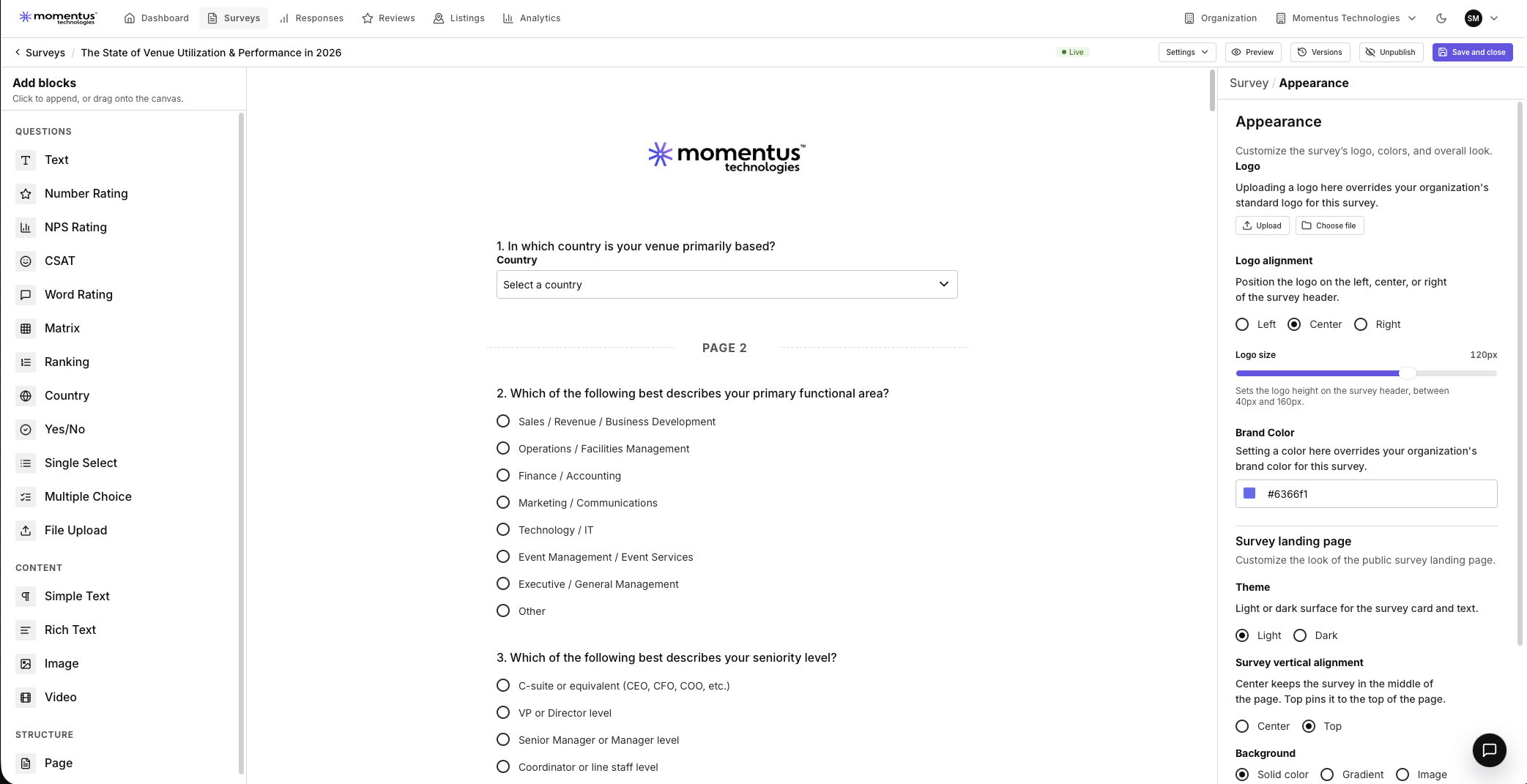
Most of the incumbents in the customer-feedback space are dinosaurs. The UI is heavy, the data model is rigid, and the integration story is bolted on. Customers now expect their tools to behave more like Stripe than like the survey software of a decade ago.
Starting from a small, sharp foundation — a real design system, modern tooling, a proper headless API — a tiny team can outpace the incumbents on velocity. Three early bets shaped everything that followed:
- Design system first. Every component built once, themed once, reused everywhere. New screens cost hours, not days. The product looks the same today as it did at MVP, only better resolved.
- Headless API at the core. The web app is one consumer of the API, not the API itself. The same endpoints would later power integrations, embeds, and AI agents — without retrofit.
- Modern stack, no legacy weight. A boring, recent choice for every layer.
The bootstrapping reality
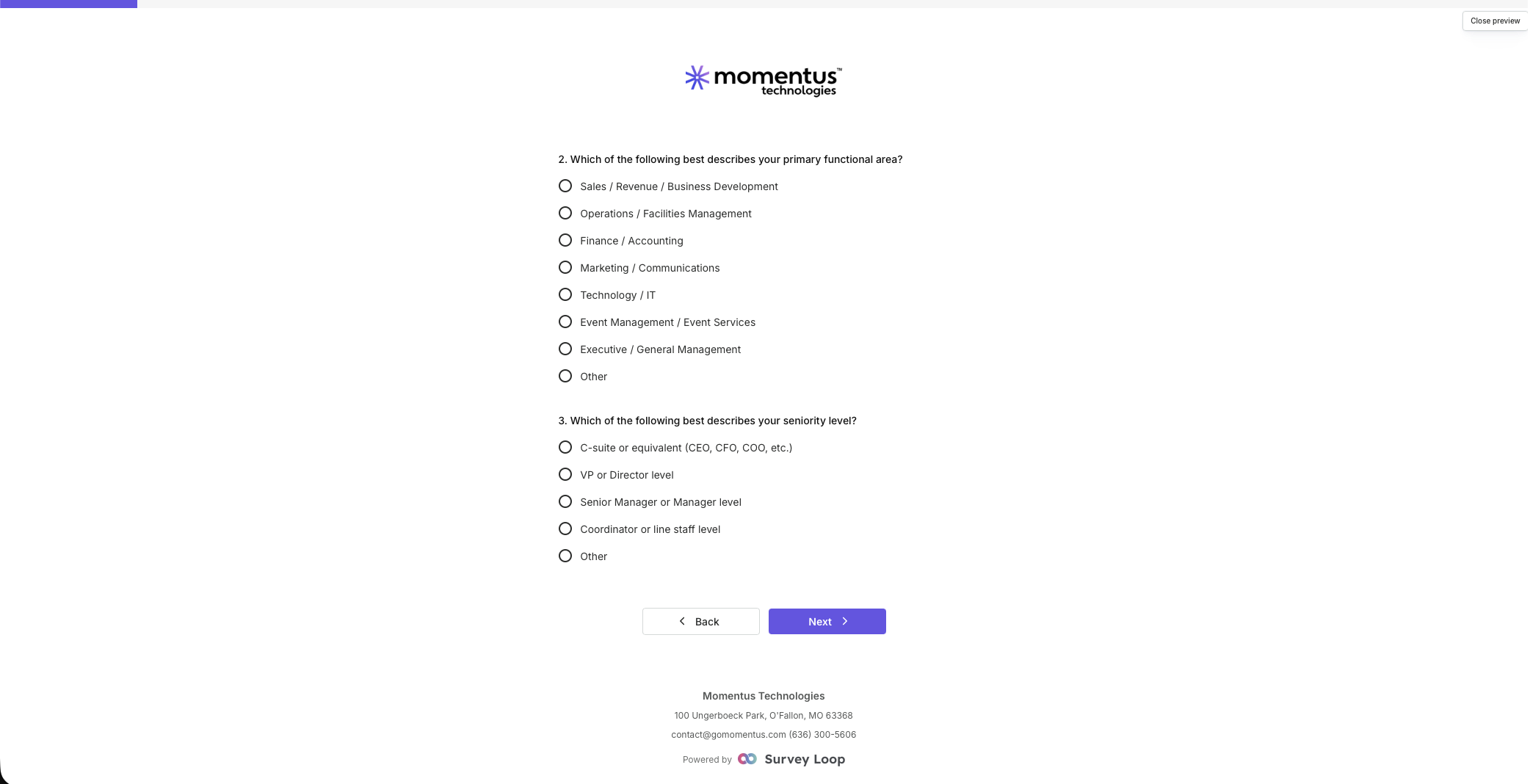
Bootstrapping is harder than people make it sound. The first stretch was moonlighting around contract work, and the signal-to-noise ratio of early company building is low. What worked was just shipping. Several large fintech players landed in the beta, and the MVP launched not long after starting.
Two rewrites
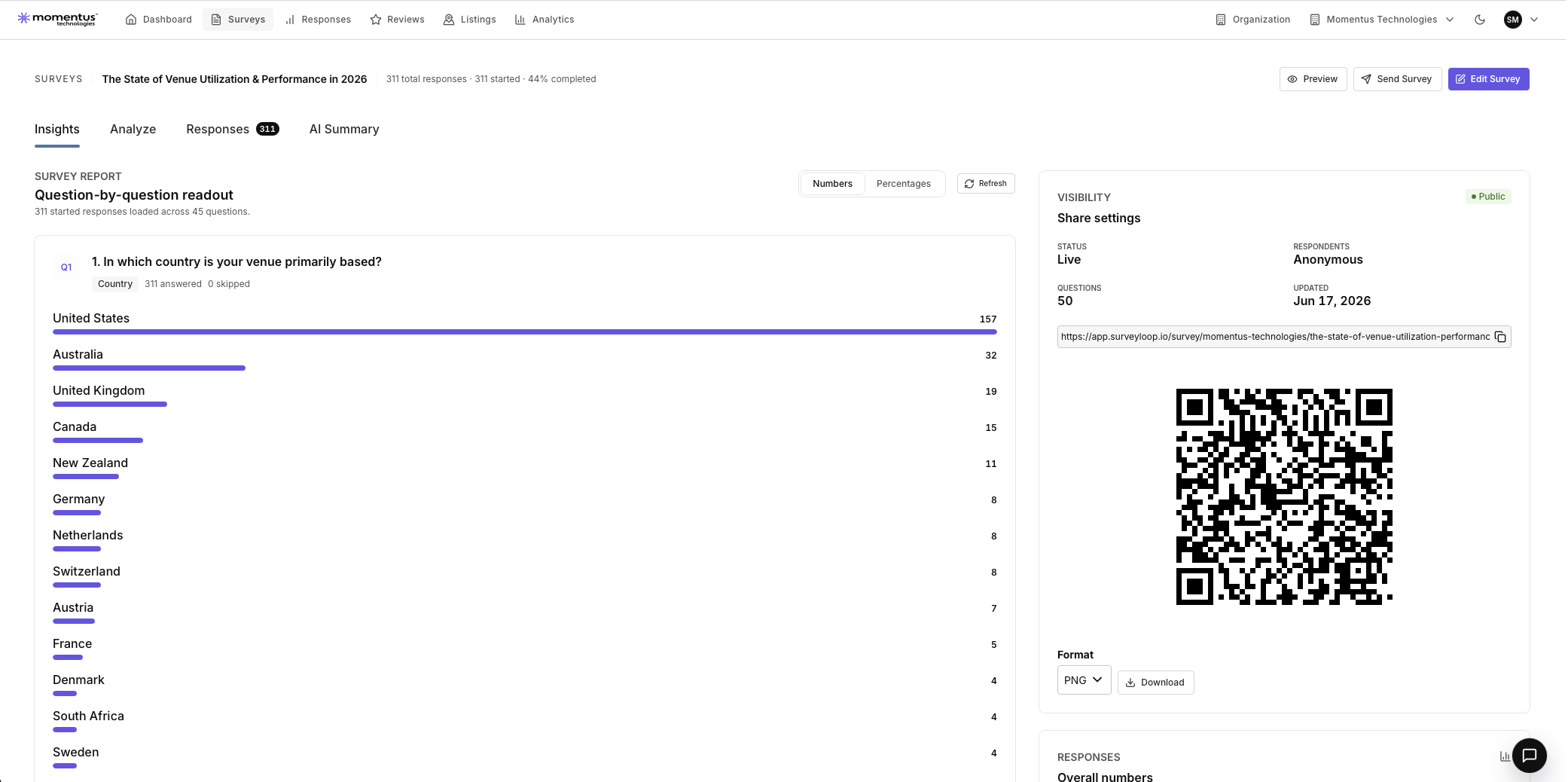
The MVP was built in Vue. It got the product to first customers fast. A few months in came a full ground-up rewrite in React — not because Vue was wrong, but because the ecosystem for AI tooling and the depth of libraries needed all sat on the React side. The lessons from the Vue MVP survived; the code did not. The rebuild took weeks. Better the rewrite then than after another year of features piled on top.
The AI inflection
Because the API was headless from day one, every piece of the product was already addressable as a structured surface. When the AI tooling around it matured, there was no new layer to invent to make the product agent-friendly — agents could talk to the same API a customer would.
The agentic capabilities customers use today — MCP support, structured analysis, agentic actions — shipped in weeks, because there was nothing to refactor on the way there.
Where it’s going
Internally the team describes Survey Loop as "the Cursor of customer feedback": an agentic-first experience sitting on a foundation that is also pleasant to use directly. An agent that can collect, route, and analyze feedback at scale is only useful if a human can also walk in cold and run a survey in five minutes. Both halves, on one contract.
Why it matters
The interesting work in an AI product is rarely the model. It’s whether an agent can do everything a person can, through the same clean contract.
Get the foundations right — design system, headless API, modern tooling — and the AI features stop being a research project and start being a release.